The Meaning of Easter in Different Religions: Judaism, Christianity, Islam
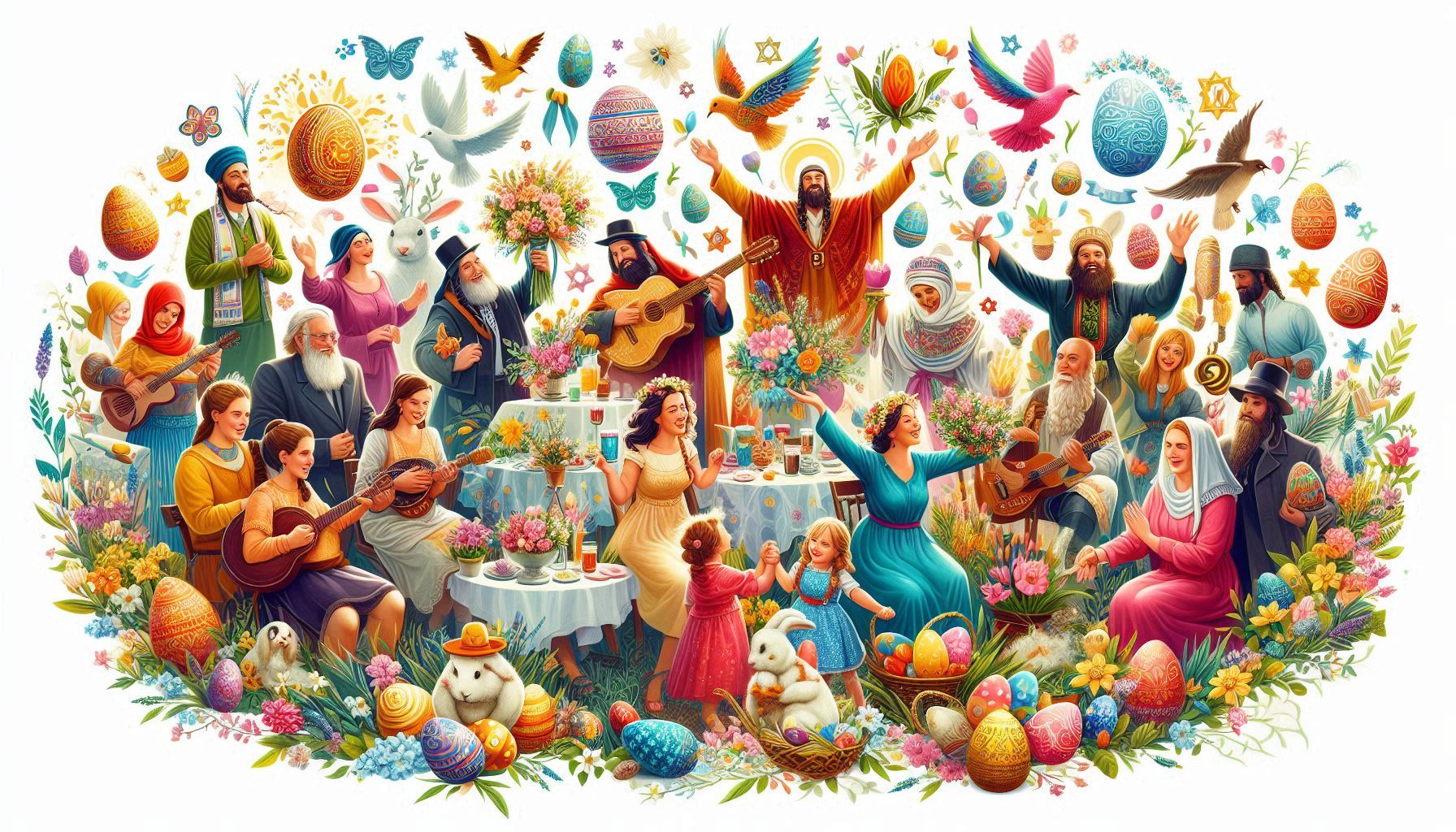
Easter is one of the most significant holidays in the Christian tradition, celebrated with great solemnity and joy. However, its symbolism and the concept of renewal and resurrection also have reflections in other religions. The celebration of Easter varies not only among different Christian denominations but also in the context of other religious systems. This article explores the meaning of Easter in Christianity, Judaism, and some other religions.
The approach of Easter is a special time in various religious traditions, associated with preparation and a unique spiritual mindset. Each religious context offers its unique rituals and practices that help believers prepare for the celebration. Below are the main aspects of preparation for Easter in Christianity, Judaism, and Islam.
Easter in Judaism
In Judaism, Easter, known as Passover (Pesach), is celebrated with a different emphasis but also symbolizes liberation and a new beginning. Passover commemorates the exodus of the Jewish people from Egyptian slavery, as detailed in the Torah. The celebration begins with the Seder—a special meal where the story of the exodus is read, prayers are recited, and songs are sung that reflect the theme of liberation.
Passover is also associated with the removal of leaven, symbolizing sin and wickedness. This festive period provides an opportunity to reflect on the value of freedom and the importance of belonging to a people who have endured suffering and emerged on the path to liberation. Thus, despite the differences in the essence of the holidays, both Easter in Christianity and Passover in Judaism represent important moments of renewal and spiritual growth.
Preparation for Passover in Judaism
Passover in Judaism serves as a reminder of the exodus of the Jewish people from Egypt. Preparation for this holiday begins long before it arrives:
- Cleaning the House: In the lead-up to Passover, Jews conduct thorough cleaning to rid their homes of all leaven (chametz)—bread products that are not permitted during the holiday.
- Buying Matzah: Special unleavened bread (matzah) is prepared for consumption during the holiday, symbolizing the hurried exodus of the Jews from Egypt when there was no time to bake regular bread.
- Seder: The evening before Passover is marked by a special meal—the Seder—where families gather together. On this evening, the Haggadah (the book recounting the exodus) is read, rituals are performed, and stuffed dishes are consumed as symbols of liberation and suffering.
- Preparation for the Seder: Traditional dishes such as maror (bitter herbs), charoset (a mixture of fruits and nuts), and a roasted egg are prepared for the Seder.
In Hinduism, the festival of Holi, known as the Festival of Colors, symbolizes the victory of good over evil and the changing of seasons. It is a time when people cleanse themselves of past grievances, which can be seen as a similar concept of renewal. Holi is celebrated with joy and festivity, indicating new beginnings and harmony.
Easter in Christianity
Easter in Christianity marks the resurrection of Jesus Christ on the third day after his crucifixion. This holiday is not only spiritually significant but also has profound theological meaning, as it represents victory over sin and death, offering hope for eternal life. For Orthodox and Catholic believers, Easter is the culmination of the liturgical year. During Holy Week, they prepare for this important gathering through fasting, prayer, and repentance.
At Easter services, believers read Gospel texts, sing hymns, and participate in the rite of communion, symbolizing unity with Christ. Holy Saturday and Easter Sunday are times when families gather around tables, share Easter eggs symbolizing new life, and prepare traditional dishes. Every detail of the celebration serves to remind us of divine love, mercy, and forgiveness, making Easter not just a holiday but a moment of spiritual rebirth.
The approach of Easter is a special time in various religious traditions associated with preparation and a unique spiritual mindset. Each religious context offers its unique rituals and practices to help believers prepare for the celebration. Below are the main aspects of preparation for Easter in Christianity, Judaism, and Islam.
Preparation for Easter in Christianity
Holy Week
In the Christian tradition, preparation for Easter begins with Lent, which lasts 40 days and culminates in Holy Week. This week includes several significant days, each with important spiritual meaning:
- Great Monday and Great Tuesday: Believers recall the events in Jesus’s life leading up to his crucifixion. Special liturgies are held on these days, with corresponding Gospel readings.
- Maundy Thursday: On the evening of Maundy Thursday, the Last Supper is commemorated, during which Christ instituted the sacrament of Eucharist. On this day, a ritual of foot washing is often performed, symbolizing humility and service.
- Good Friday: This is a day of mourning when Christians remember Christ’s crucifixion. Services dedicated to the crucifixion take place in churches, and believers spend time in prayer and reflection.
- Holy Saturday: The nighttime resurrection service includes kindling the Easter fire and blessing the Paschal candle. This symbolizes the light of Christ coming into the world.
Easter Rituals
Easter services include the reading of Gospel texts, the singing of hymns, and communion. Believers also exchange red eggs, symbolizing new life and resurrection. On Easter, families gather around a festive table where traditional dishes such as Kulich (Easter bread), Paskha (a dairy dessert), and painted eggs are prepared.
Easter in Other Religions
The theme of resurrection and renewal is present not only in Christianity and Judaism. In Islam, Id al-Fitr celebrates the end of Ramadan, symbolizing joy, forgiveness, and new beginnings. Although this holiday is not directly related to the concept of resurrection, it is also a time for gathering and uniting with family and community.
Preparation for Id al-Fitr in Islam
While Id al-Fitr is not directly related to Easter, it is a celebration that marks the end of Ramadan, a month of fasting and spiritual cleansing. Preparation for this holiday includes:
- Final Worship: Believers participate in nightly prayers (Tarawih), and the last days of Ramadan become a time for intensified prayer and reading of the Quran.
- Zakat al-Fitr: This is a mandatory charitable donation made before the holiday to help the poor and needy, demonstrating compassion and solidarity with the community.
- Festive Meal: On the day of the holiday, believers participate in communal prayer at the mosque and later gather around a festive table, where various sweets and traditional dishes are served. Often, treats such as sesame cookies or maamoul are prepared.
Conclusion
Thus, the meaning of Easter varies across different religions, but the overall concept of renewal, freedom, and resurrection permeates all these traditions. In Christianity, the focus is on victory over death; in Judaism, it is on liberation from slavery; and similar motifs appear in other religions, highlighting the importance of spiritual renewal. These holidays remind us of the necessity for unity among people and how religious practices can connect hearts, regardless of cultural differences. Easter, in all its manifestations, serves as a symbol of hope and a new beginning that is so needed in our society.


Comments
Post a Comment